Safe to share
How safe would you feel in a car towing a smoking wood-fired pizza oven, in Saturday morning traffic, in your city?
And then manoeuvring it down a narrow laneway in the inner city.
Legal? Probably just on the line.
Risky? Certainly.
Safe? According to the pizza man it was.
I bet he was given a wide berth on the roads.
I was glad I sighted his insurance policies when I booked him to cater for our annual shindig last weekend.
I may have been concerned for his safety. The point is he felt safe.
One person’s sense of safety might feel anything but safe to someone else.
That’s why I don’t declare at the start of a workshop that ‘this is a safe place’. For me, that just begs responses like, ‘says who?’ and ‘what do you mean by ‘safe’?
I prefer asking people to think about what they need, what might help them, to contribute to the workshop I’m facilitating. If I get blank looks, I might add, ‘need from each other, from yourself, from me….’
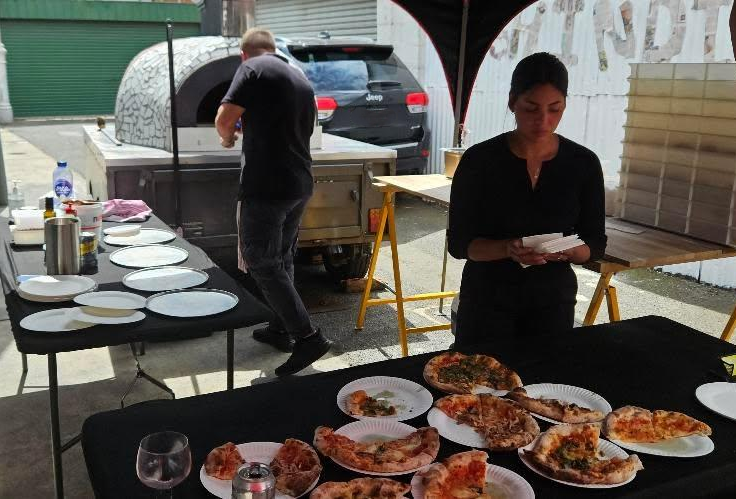
Pizza from the oven on demand at our shindig
In my Flearn workshops, for example, I ask ‘what will help you to share your stuff ups today?’
Here’s some of the things that Flearners said will help them:
Time to reflect on the stuff up – not just going to the solution.
Confidentiality
Empathetic listening
Gin & tonic
Feeling heard
No judgement
Hearing others’ mistakes
Sharing with people who understand.
Honesty
Being open and curious
Respecting what’s shared, the vulnerability – discretion
Others leaning in and sharing too
Chocolate
Humour
We all agree that stories stay with us, ok to share generally, but no identification of people, names or places
The structure that accompanies this question is just as important.
I give them time to think on their own, before they share in pairs and choose one or two to share with the wider group, usually with them writing a few up on the white board.
Three simple but important steps. They create time and space to be honest and vulnerable, in stages. That’s less likely to happen if I ask for a group brainstorm.
Once we’ve got a list of ‘what will help’, we spend a bit of time diving into the assumptions behind ‘honesty’, ‘no judgement’, ‘open and curious’, ‘honesty’ and ‘empathetic listening’.
I then ask how the group is going to keep each other accountable for these ‘helpers’ and ‘needs’ and voila, we’ve landed on a guide for how they will work together to share their mistakes.
Our pizza man arrived feeling safe to share his pizzas. There were no stuff ups or mistakes. And the pizzas were scrumptious.
Thanks for reading this far.
Stay (fl)awesome!