
Dig in not out.
How you respond when things go wrong often matters more than the mistake itself. And yet most of us were never taught how to respond well.
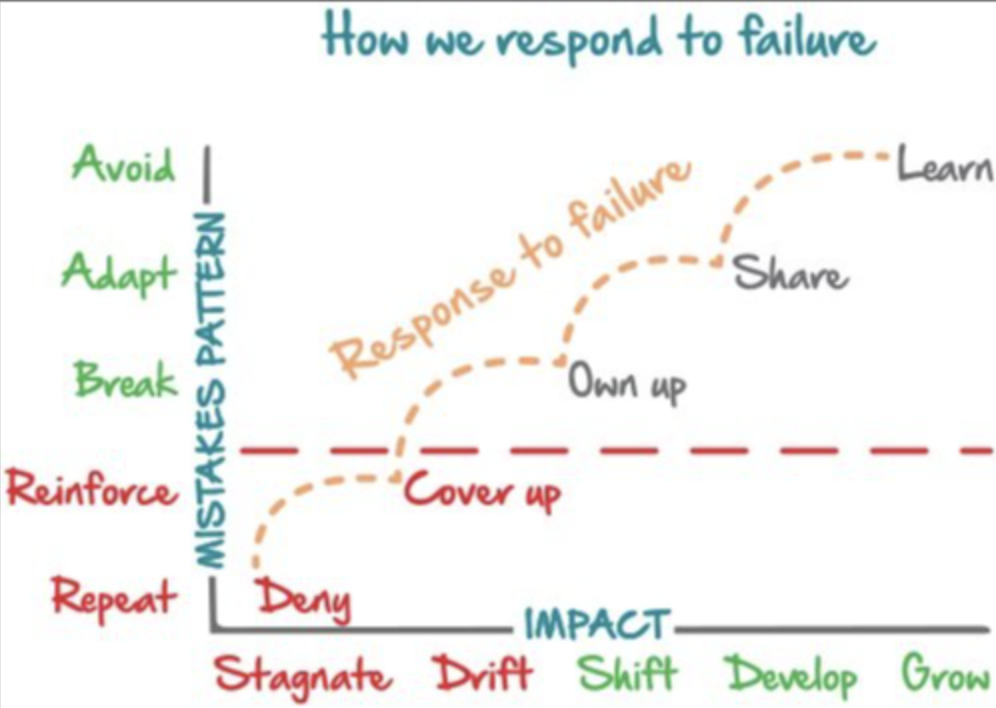
We learned early to deny. Our mouths move faster than our brains and suddenly we’ve said something we can’t unsay. Denial isn’t a character flaw. It’s a very human reflex. But someone always knows. And the cost shows up somewhere, even when we think we’ve got away with it.
Or we cover up. Cover-up is denial’s more calculated cousin. We learn to do it when we’re little — the moment we realise I know something you don’t know — and it can be hard to stop. It can protect us. It usually just postpones the inevitable discovery.
My mistakes ladder below has five rungs. I suspect that many of us spend more time at the bottom than we’d like to admit.
© Jacinta Cubis
‘Yeah, that was me.’ Three simple and brave words. Owning up is a sign of deep integrity. It can change the sense of safety in a group fast. When a leader does this first, in front of their team, they make it safer for everyone else to do the same.
Then we might start to share our mistakes and stuff ups. When we share what’s not working, something shifts. The question moves from ‘who did this?’ to ‘how, or what, can we develop from this?’ And that’s where the real learning starts — not in moving on, but in digging in.
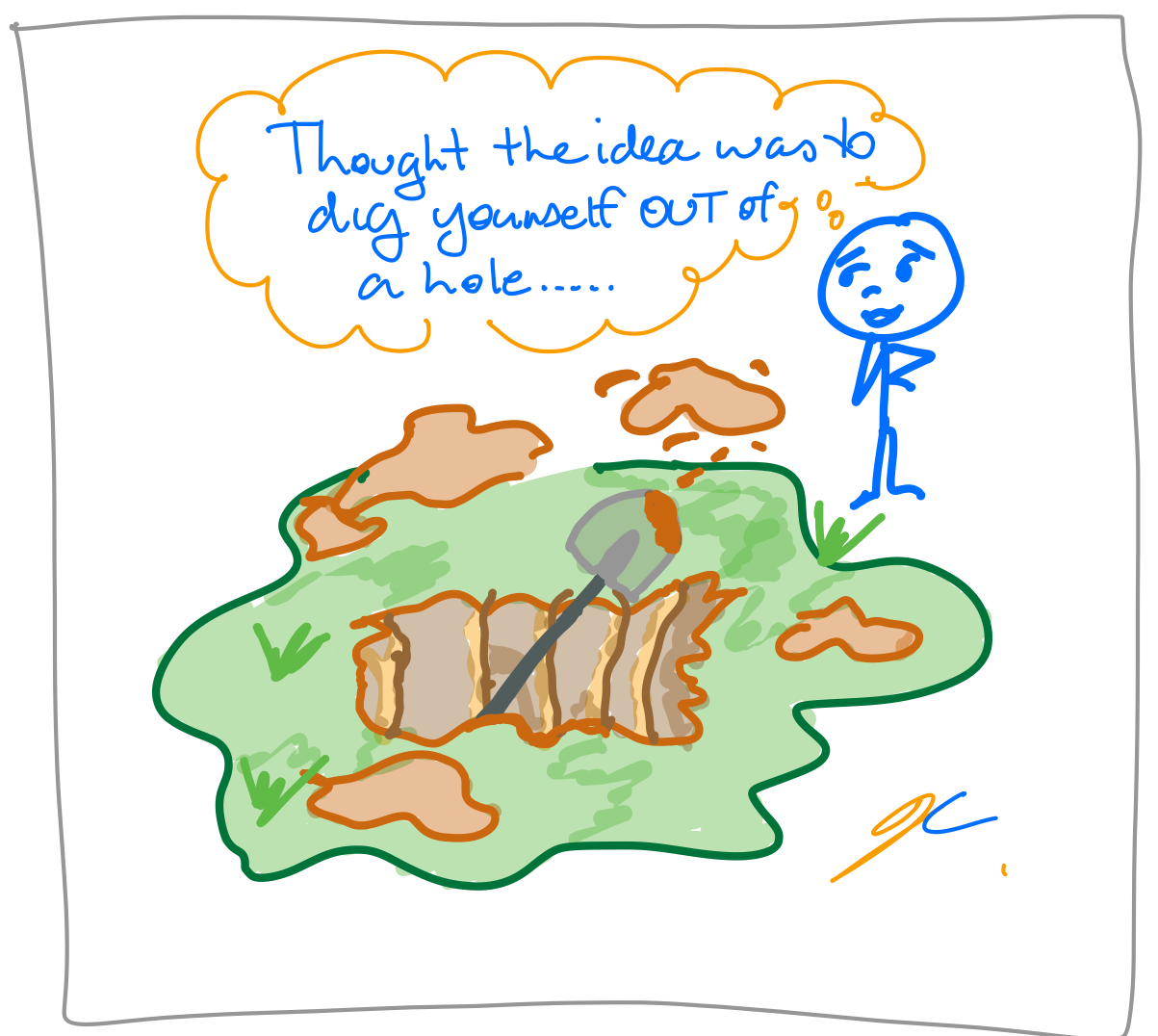
When you make a mistake, do you reach for the shovel to dig yourself out of a hole, or to dig deeper to learn from it?
© Jacinta Cubis
How you respond to failure shapes everything that comes next.
Thanks for reading this far!
Stay (fl)awesome!