Paint. Hike. Participate
Creating and holding a safe space takes on a new meaning when the dingos howl at night.
And when you ask people to paint ‘en plein air’, with a medium that they haven’t ever used.
And then invite them to show each other what they’ve painted, a group of strangers. We got to know each other fast.
These challenges need a thoughtful and considerate guide, and we had two on our ‘paint and hike’ in Mount Kosciuszko national park.
Our tents were thin and I was a bit scared of those dingos. But my guide didn’t laugh at me. She reassured me with her knowledge and experience. They were not going to approach us.
My first drawing was hopeless. Tight and out of proportion. But I didn’t reach for the eraser. Because our art teacher, our second guide, had set us up to play, experiment and sit with our ‘mistakes’.
Our guides took us through dark caves, up steep hills and off track through wild, marshy grasses and over cold creeks.
We got to camp in plenty of time to set up, with hours left to paint. And we left on time the next day without feeling rushed.
They were patient as we struggled to set up our tents—or maybe that was just me.
We could have been a challenging group. Some had never painted before. Others had never hiked. One had done neither.
What we did have in common was being part of a group, carrying our basic needs on our back.
My shoulders, legs and creative muscles were not the only things that got a workout over those four days.
My facilitation muscles got a workout too because I was part of this group, participating.
A facilitator needs to participate in workshops, as a member of the group, just like a writer needs to read and an artist needs to see art. Or a musician needs to listen to music, and a teacher needs to learn.
I learned a lot from observing our guides as a participant.
Next time you’re in a workshop that’s working or not working, zoom out and notice the facilitator’s craft.
🔶Draw a fat margin on one side of your notes
OR
🔶Mark up a page with two columns headed, ‘say’ and ‘do’
🔶 Jot down your observations about the facilitation and what the facilitator says and does.
-What are they doing—or not doing?
-What do they say and do to open, and frame the session?
-Can you picture their workshop plan or storyboard as the session progresses?
-How do they elicit contributions from the group?
-What sort of questions are they asking? Open? Closed? Do they start with a ‘why’, ‘what’ or ‘how’? How do those questions land with the group?
-How do they shift the conversation from solo thinking to pair work to group discussion?
-What do they say and do to balance the voices in the room?
-How do they create the space, and time, for quieter people to contribute?
🔶Afterwards, highlight anything that you might like to ‘try’ in your next meeting or workshop.
What else would you look out for?
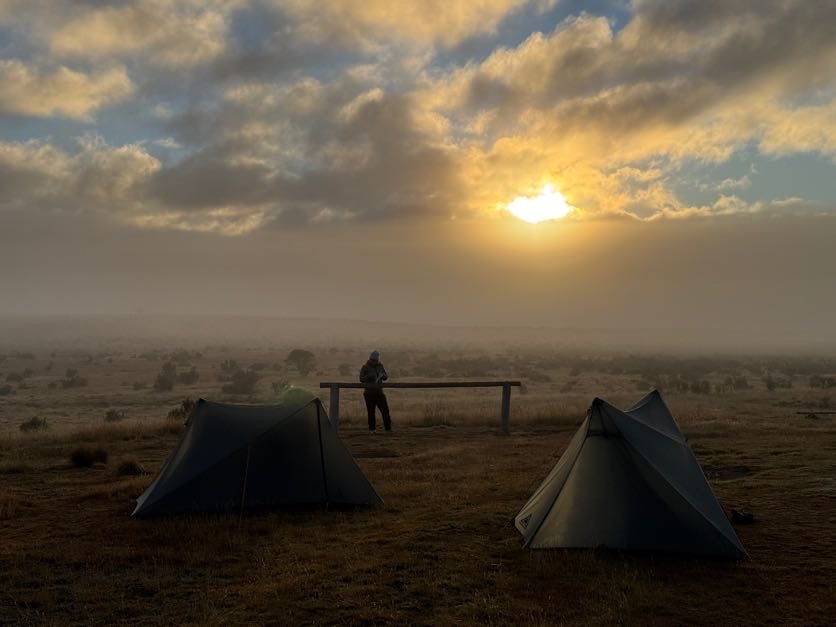
Photo: Caroline Friend
By the way she was right. Those dingos never came near us, just like she promised.
Thanks for reading this far!
Stay (fl)awesome!