
The conditions for hard work
If your team or group is doing hard, deliberate work and you want to get the conditions right for it, this story is for you.
I’m in a group that’s been working through hard stuff together, and we love it.
That’s why we keep turning up every Tuesday night, week after week, as the weather gets colder.
Our community choir has been learning just one song over this ten-week term. It is a haunting acapella with four parts and a solo.
It’s tough, we are stretching ourselves and we love it. None more so than our ever-patient teacher.
She has set the bar high this term. Ours is not a choir you need to audition for. Whether you can sing or not is immaterial. Only a few can play an instrument and read music.
We are learning so much about our own voice and how our voices work together.
We must lift our eyes from the sheet music to really look at the people in our ‘part’ and all the other parts. We’ve had to get better at reading and sensing each other.
We’ve had debates about timing and phrasing. A few have even started to practice at home on their own. That’s called homework!
We are enjoying the challenge and the results — when we get the notes and the timing right — are beautiful. Well, to our ears at least.
And we keep coming back for more.
Time flies even though we are learning slowly — we’ve done three pages in ten weeks. We’ve got one session left to learn the last page and sing the whole thing through, without stopping to correct anything.
Our enthusiasm outweighs our confidence.
We’re not preparing for a concert. This is work for pure pleasure.
I help groups work through hard stuff together and being in this choir has highlighted a number of things that help groups stay the course — over a few hours, a day or several days.
This is what I do with groups who are doing hard, deliberate work.
Set high expectations – an acapella with five parts. For a team, that might be the brief no one thinks they can pull off.
Give groups respect – as in, 'this work is hard, you are capable, let's give it a go'.
Provide the tools to do the work – sheet music that was not dumbed down, a keyboard to give us our starting notes, and an example to aspire to. For a team, that's the real data, not the sanitised version, and someone who's done this before to show them what's possible.
Keep things realistic – the maximum work we were set was one page per session and sometimes just a few bars. For a team, that's breaking the hard conversation into pieces they can finish, not the whole thing in one sitting.
Give groups time – to learn one note, one bar or one page. To ask questions, to check with each other. Taking things slowly can still hold a group's attention and commitment.
Be patient – as our teacher was with us, as we were with each other, and as we tried to be with ourselves. For a team, that's resisting the urge to rush to a decision before the group is ready for one.
Your team is not this choir, and their ‘hard work’ is not a song. It's the tough thing you’ve been putting off, or nobody wants to talk about — but the conditions are the same.
What difference would it make if your team could keep turning up with the same enthusiasm to embrace the hard work as our choir has been doing?
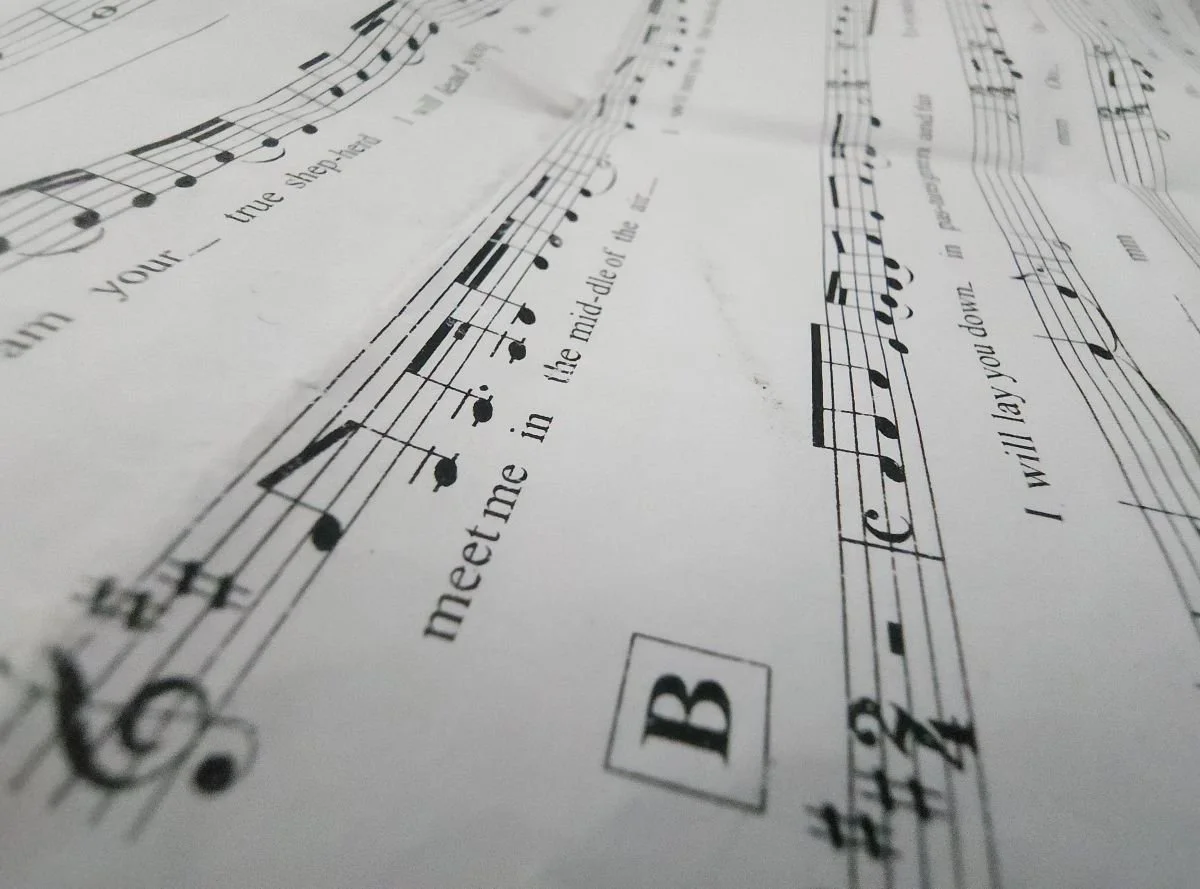
© Jacinta Cubis
Thanks for reading this far!
Stay (fl)awesome!